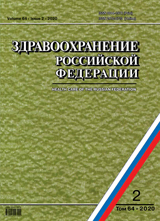
The journal «Health Care of the Russian Federation» — is a scientific-practical peer-reviewed journal, targeted at heads and staff of authorities and institutions of the healthcare and of the Rospotrebnadzor, healthcare practitioners and scientists.
Founded: 1957
Founder: F.F. Erisman Federal Research Center for Hygiene
Frequency: 6 issues per year
The journal publishes scientific and practical materials on healthcare development. Much attention is paid to issues of demography, social hygiene.The journal presents data on the state of health of separate categories of the population, sanitary and epidemiological situation in different regions of Russia, publishes information on the influence of environmental factors and industrial activity on population health. Special attention is given to materials dedicated to scientific justifications of preventive measures for health maintenance and demographic situation improvement. The journal places information about the activity of the healthcare system, legal and regulatory acts related to work perfection of health authorities and institutions, as well as publishes articles about the experience and new work directions of territorial health authorities and institutions.
The journal "Health Care of the Russian Federation" is included in the List of peer-reviewed journals and publications recommended by the Higher Attestation Commission (HAC) of the Ministry of Education and Science of the Russian Federation to publish the results of dissertations seeking for the degree of candidate and doctor of science as a peer-reviewed scientific publication included in international abstract documents databases and citation systems. Journal is indexed in: Scopus, International Aerospace Abstracts, Ulrich's International Periodicals Directory, OCLC Russian Academy of Sciences Bibliographies, Russian Science Citation Index (based on Web of Science).
Current issue
HEALTH CARE ORGANIZATION
Introduction. According to WHO (2022), effective doctor-patient communication is included in ten key indicators of the quality of medical care. Modern research has confirmed the critical role of doctor–patient interaction in achieving optimal clinical outcomes, which can increase patient adherence to treatment by 30–40% and reduce the risk of diagnostic errors by 25%. The low quality of doctor–patient interaction in global healthcare accounts for 15–30% of the services provided, in Russian — 30–45%. The significant variability of the indicator is due to the lack of effective monitoring tools, standardized assessment protocols and the construction of predictive models of communication risks.
The purpose of the research. Study of the psychosocial mechanisms of effective doctor–patient communication and developing managerial technologies to improve it.
Materials and methods. Based on patient assessments, the levels of quality of interaction with the primary care physician providing primary health care (PHC) to the population of medical institutions in Moscow have been determined. Methods of multiple factor analysis of data from a parallel survey of general practitioners (GPs) as family doctors (FDs) and their patients were applied. The assessment results have been grouped into the «Low» and «High» levels of the «Doctor–Patient Interaction» indicator. Using the «Decision Tree» method, an algorithm for managing the quality of the «Doctor–Patient» system has been calculated.
Limitations. The study was limited to a representative sample of FDs and patients of medical institutions in PHC in Moscow.
Conclusion. The article provides a scientifically grounded methodological approach to managing the quality of doctor–patient interaction based on monitoring the psychosocial factors of the work environment and applying managerial technologies to prevent critical levels of their impact on the satisfaction of GPs with their work as a leading communicative factor in patient satisfaction with medical care.
Compliance with ethical standards. The study was approved at a meeting of the Independent ethics committee of the N.A. Semashko National Research Institute of Public Health (Protocol No. 2, May 17, 2022). Informed consent was received from all participants.
Contribution of the authors:
Zudin A.B. — concept and design of research, organization of research, editing;
Kuznetsova M.A. — concept and design of research, collection and systematization of primary data, statistical processing and analysis of primary data, writing text.
All authors — approval of the final version of the article, responsibility for the integrity of all parts of the article.
Funding. The study had no sponsorship.
Conflict of interest. The authors declare the absence of obvious and potential conflicts of interest in connection with the publication of this article.
Received: October 30, 2025 / Accepted: April 24, 2026 / Published: July 28, 2026
Introduction. The literature contains information on the quantitative condition of demographic losses of the population by the matrimonial behavior of people, national and cultural traditions, the quality of medical care, number and level of health of women of reproductive age. However, a qualitative analysis of demographic losses of the population has not previously been carried out.
The purpose of the study is to determine the medical determinants of population demographic losses.
Materials and methods. A retrospective study of demographic losses of the population of the Republic of Chechnya in 2010–2021 was carried out. The methods of dynamic series, correlation and regression analysis, and mathematical modeling are used.
Results. Medical determinants of losses identified. Data on antenatal losses (abortions), pregnancy pathology forming antenatal losses, birth pathology forming intra- and postnatal losses in the Chechen Republic are presented.
Limitations of the study. The study’s limitations include the use of mathematical life and fertility tables; during their use, indicators were obtained that confirm the transformation of the extended reproduction model of the Chechen Republic’s population into a simple reproduction model in 2010–2021.
Conclusion. The pathology of pregnancy and childbirth in women mothers is closely associated with adverse trends in population reproduction indicators: gross population reproduction rate, net population reproduction rate, total natural population growth rate, true natural population growth rate, which made it possible to attribute the pathological conditions in mothers during pregnancy and childbirth to medical determinants of demographic losses.
Compliance with ethical standards. The study does not require the submission of a conclusion from the biomedical ethics committee or other documents.
Contributions:
Shapovalova M.A. — concept and design of the study, editing, approval of the final version of the article, responsibility for the integrity of all parts of the article;
Ezhaev A.V. — collection and processing of material, writing of the text;
Abramova D.A. — statistical data processing.
Funding. The study had no sponsorship.
Conflict of interest. The authors declare no conflict of interest.
Received: March 2, 2026 / Accepted: April 24, 2026 / Published: July 28, 2026
Introduction. The provision of qualified personnel to medical institutions providing primary health care remains a significant problem in Russian healthcare, which necessitates a comprehensive assessment of personnel provision at the regional healthcare system level for subsequent rational planning of human resources.
The purpose of the study is to develop an algorithm for making managerial decisions in the field of healthcare personnel policy at the regional level based on the results of an analysis of the staffing of primary healthcare providers conducted using the index method.
Materials and methods. The research materials include the results of an analysis of the staffing of primary health care facilities by doctors over 2018–2022, using the methodology for calculating the human resources well-being index in healthcare developed by the team of authors at the Russian Research Institute of Health, which was modified for the study of human resources providing primary health care. The research base includes all regions of the Russian Federation. The methodological framework is based on organizational modeling and analytical methods.
Results. Based on the data on the values of the human resources well-being index in healthcare for 2022 and the trends in its development, there were identified four clusters, included the constituent entities of the Russian Federation that have similar characteristics of the human resources well-being index in healthcare. The grouping of regions into clusters allowed for a differentiated approach to making management decisions in the field of implemented human resources policy in healthcare at the regional level based on a specially developed algorithm.
Limitations of the study. The study materials are limited to the results of the analysis of staffing by primary health care physicians using the methodology for calculating the human resources well-being index in healthcare.
Conclusions. The use of the management decision-making algorithm provides an opportunity to choose the tactics of further actions by the executive authorities of the constituent entities of the Russian Federation in relation to the implemented personnel policy in healthcare at the regional level to improve the performance of medical institutions providing primary health care.
Compliance with ethical standards. This study does not require a conclusion from the Local Ethics Committee.
Contribution of the authors:
Senotrusova Yu.E. — collection and processing of material, statistical data processing, writing of the text;
Khodakova O.V. — editing;
Senotrusova Yu.E., Khodakova O.V. — research concept and design, approval of the final version of the article, responsibility for the integrity of all parts of the article.
Funding. The study had no sponsorship.
Conflict of interest. The authors declare the absence of any conflicts of interest regarding the publication of this paper.
Received: January 16, 2026 / Accepted: April 24, 2026 / Published: July 28, 2026
Introduction. The basis for managing primary health care for the adult population, including pneumonia, is the resource base of the healthcare system, the basic element being human resources. The problem of shortage and rational structure of doctors providing care in outpatient settings remains relevant despite the implementation of personnel policy measures.
The purpose is to conduct an analysis and evaluate the trend in the human resources potential of medical institutions providing primary health care to the adult population of St. Petersburg for pneumonia, for 2015–2024.
Materials and methods. The study was conducted based on data from federal statistical observation form No. 30 “Information on a medical organization” for 2015–2024 in St. Petersburg using statistical, analytical. and comparative methods.
Results. In the structure of doctors providing primary health care to the adult population for pneumonia on a district basis, an imbalance in staffing was revealed with a predominance of district general practitioners (82.2%). Over 10 years, a trend towards an increase in the staffing and provision of district general practitioners was found (by 19.8% and 45.1%, respectively). A similar trend is observed among general practitioners, but it is less pronounced; there is a shortage of doctors in this specialty (staffing rate is 75.1%). The number of individuals working as pulmonologists has increased by 30.0% over 10 years, which is reflected in the growth of staffing and provision of the population with these specialists (by 22.4% and 23.0%, respectively).
Limitations. The research materials are limited to the results of the analysis of the human resources potential involved in providing primary health care to the adult population in the territory of St. Petersburg, including for pneumonia, based on form No. 30 for 10 years.
Conclusion. In St. Petersburg, despite the trend toward increasing staffing levels and the availability of primary care physicians and pulmonologists, the issue of staff shortages and imbalances remains pressing, necessitating a comprehensive approach to addressing the problem.
Compliance with ethical standards. This study does not require a conclusion from the Local Ethics Committee.
Contribution of the authors:
Kareva A.A. — research concept and design, writing the text, compilation of the list of literature, statistical data processing;
Klyukovkin K.S. — research concept and design, editing;
Kochorova L.V. — collecting and processing of material, writing the text.
All authors are responsible for the integrity of all parts of the manuscript and approval of the manuscript final version.
Funding. The study had no sponsorship.
Conflict of interest. The authors declare no conflict of interest.
Received: August 13, 2025 / Accepted: April 24, 2026 / Published: July 28, 2026
Introduction. The problem of occupational burnout in healthcare is of particular importance, as medical work places increased demands on professional skills and the absence of errors, and a decrease in the effectiveness of medical personnel can lead to adverse consequences for patients.
Objective. Study of professional burnout of doctors in cardiac surgery at the present stage and identification of risk factors influencing the development of professional burnout from the point of view of the career trajectory, with the subsequent development of measures to mitigate the identified risk factors.
Material and methods. A multi-stage study, including a questionnaire survey of doctors specializing in cardiovascular and endovascular surgery to assess professional burnout using the Maslach Burnout Inventory(MBI) and identify risk factors for the development of professional burnout in terms of career trajectory, systematization and statistical processing of the obtained data, as well as the development of new approaches to personnel management in cardiac surgery, allowing the identified risk factors to be mitigated.
Results. A comprehensive analysis of the survey results made it possible to identify the main risk factors for the development of professional burnout in terms of career trajectory. No statistically significant differences in the structure of risk factors depending on the length of respondents’ professional experience were identified. At the same time, a statistically significant correlation was found between satisfaction with the career trajectory and the severity of professional burnout. Based on the data obtained, a new concept for managing medical personnel was developed.
Conclusion. The proposed justified concept of personnel management can be used to prevent professional burnout in employees associated with career expectations, which in the long term will contribute to improving the quality of cardiac surgical care.
Limitations. The complexity of formulating questions for a survey of doctors to identify risk factors for the development of professional burnout from the perspective of career trajectory, the complexity of verifying the validity of a specialized questionnaire due to its novelty and the lack of analogues.
Compliance with ethical standards. The design and procedure of the study fully comply with the provisions of the Declaration of Helsinki of the World Medical Association, the recommendations of COPE (Committee on Publication Ethics), the requirements of Federal Law No. 323-FZ “On the Fundamentals of Protecting the Health of Citizens in the Russian Federation” and Federal Law No. 152-FZ “On Personal Data” and do not require a separate opinion of the medical ethics committee. All participants gave informed voluntary written consent to participate in the study.
Funding. The study had no sponsorship.
Conflict of interest. The author declares no conflict of interest.
Received: October 2, 2025 / Accepted: April 24, 2026 / Published: July 28, 2026
PREVENTION OF NONINFECTIOUS DISEASES
The purpose of the study: to determine measures to optimize the work of health centers for more effective preservation of the health in the adult population.
Materials and methods. The study covered the activities of thirteen functioning adult health centers in the Nizhny Novgorod region, along with an analysis of the regulatory framework governing their operations. The statistical analysis was based on data from the reporting form No. 68, “Information on the activities of a health center,” provided for the Nizhny Novgorod region for the period 2019–2024.
Results. Health centers of the Nizhny Novgorod region perform an important function in disease prevention, but their potential is not fully utilized due to managerial and regulatory limitations. The key managerial problems are low rates of dynamic observation in health centers, failure to fully implement the comprehensive examination program due to equipment depreciation. The main problems from the regulatory framework are related to the imperfection of the reporting form of health centers, the predominance of quantitative assessment indicators over qualitative ones, and insufficient development of the procedure for conducting dynamic observation in health centers.
Limitations. The research materials are limited to the analysis of the activities of 13 existing health centers for the adult population in the Nizhny Novgorod region and the selected time period of 2019–2024.
Conclusion. Systematic work to improve the regulatory framework, including the creation of a comprehensive system of performance indicators and optimization of reporting forms will increase the efficiency of health centers, improve the quality of preventive work and make a significant contribution to solving strategic tasks to improve the health in the population of Russia.
Compliance with ethical standards. The study does not require the conclusion of the Biomedical Ethics Committee or other documents.
Contribution of the authors:
Zapoeva V.A. — concept and design of the study, writing the text, compiling the list of references, statistical data processing;
Romanova T.E. — writing the text of the article, editing;
Savitskaya N.N. — approval of the final version of the article.
Funding. The study had no sponsorship.
Conflict of interest. The authors declare no obvious or potential conflicts of interest in connection with the publication of this article.
Received: October 27, 2025 / Accepted: April 24, 2026 / Published: July 28, 2026
Obesity remains one of the most significant medical and social problems in the Russian Federation, serving as a key risk factor for chronic non-communicable diseases. This review presents a systematic analysis of current data on the molecular and genetic basis of obesity, based on literature search and analysis in Scopus, Web of Science, PubMed, The Cochrane Library, and RSCI databases. The contribution of key genes to the development of metabolic disorders is examined, and the potential applications of genetic testing for personalizing preventive measures are evaluated. Special attention is paid to the analysis of the “Healthy Nutrition” educational cluster as an innovative model integrating scientific research, educational programs, and practical healthcare. Based on a comprehensive data analysis, practical algorithms for personalized prevention using genetic testing are proposed, the effectiveness of digital educational platforms is assessed, and organizational and economic aspects of implementing the cluster model in the Russian healthcare system are examined in detail. Particular importance is given to the development of practical recommendations for implementing a personalized approach in clinical practice and the public healthcare system. The obtained results demonstrate the high potential of educational clusters for improving the obesity prevention system and can be used in developing targeted regional programs for public health promotion, which will contribute to reducing morbidity and improving the quality of life of the population.
Keywords:
For citation: Soshina M.S., Lapik I.A., Gapparova K.M., Tarmaeva I.Yu. Personalized obesity prevention: from genetic predictors to practical solutions. Zdravookhranenie Rossiiskoi Federatsii / Health Care of the Russian Federation, Russian journal. 2026; 70(3): 225–229. https://doi.org/10.47470/0044-197X-2026-70-3-225-229 https://elibrary.ru/vjaycl (in Russian)
For correspondence: Maria S. Soshina, e-mail: maria.soshina@gmail.com; Irina A. Lapik, e-mail: lapik_@inbox.ru
Contribution of the authors: Soshina M.S., Lapik I.A. — material collection and processing, writing the text, editing, references compilation; Gapparova K.M., Tarmaeva I.Yu. — research concept and design, editing, final approval. All authors are responsible for the integrity of all parts of the manuscript and approval of the manuscript final version.
Funding. The study was conducted as part of the state assignment FGMF-2023-0002.
Conflict of interest. The authors declare no conflict of interest.
Received: August 18, 2025 / Accepted: April 24, 2026 / Published: July 28, 2026
PREVENTION OF INFECTIOUS DISEASES
Introduction. Community-acquired pneumonia (CAP) remains a significant health problem requiring attention due to its high prevalence and difficulties in etiological diagnosis.
The purpose is to study the epidemic process of CAP in the Lipetsk region over 2011–2024. and assessing the relationship with the incidence of influenza and acute respiratory viral infections.
Materials and methods. Analytical, logical, epidemiological, and statistical methods were used. Data from federal statistical reporting forms No. 1 and No. 2 of the Federal Service for Supervision in Protection of the Rights of Consumer and Man Wellbeing (Rospotrebnadzor) for 2011–2024, calculated per 100 thousand population, were used. Statistical processing was carried out using variation statistics methods in Microsoft Excel (2010). Correlation was assessed using the Spearman coefficient.
Results. The CAP incidence in the total population of the region increased by1.7 times (from 450.5 per 100 thousand in 2011 to 800.8 in 2024); the long-term average was 604.23. The maximum was recorded in 2020 (1194.78). The correlation of CAP with influenza and ARVI was weak and statistically insignificant. The structure of morbidity was dominated by adults (70.3%), among children — groups of 7–14 years (32.2%) and 3–6 years (26.3%). In 2023, there was an increase associated with the circulation of Mycoplasma pneumoniae. Before the pandemic, M. pneumoniae and other bacteria predominated; in 2020–2022 SARS-CoV-2 dominated; Since 2023, bacterial agents have become active again. About 50% of cases remained etiologically undeciphered (in 2024 — 72%).
Limitations. When studying the CAP incidence in the Lipetsk region, an analysis of data from official statistical reporting forms No. 1 and No. 2 “Information on infectious and parasitic diseases” of Rospotrebnadzor for 2011–2024 for the Lipetsk region was carried out.
Conclusions. The epidemiological situation regarding CAP in the region remains unstable. It is necessary to improve diagnostics with the introduction of modern laboratory methods and increase the level of etiological decoding to optimize prevention and reduce mortality.
Compliance with ethical standards: the study does not require the submission of the conclusion of the biomedical ethics committee or other documents.
Contribution of the authors:
Korotkova T.S. — The concept and design of the study, writing text, compiling a list of literature;
Trukhina G.M. — editing, approval of the final version of the article;
Reshetova A.A. — collection and processing of material, writing text, statistical processing, compiling a list of literature;
Savelyev S.I. — editing, approval of the final version of the article, responsibility for the integrity of all parts of the article;
Tabolina E.Yu. — statistical processing of material, editing;
Ushakov S.A. — approval of the final version of the article, responsibility for the integrity of all parts of the article.
All co-authors approved the final version of the article.
Funding. The study did not have sponsorship.
Conflict of interests. The authors declare the absence of a conflict of interest.
Received: October 6, 2025 / Accepted: April 24, 2026 / Published: July 28, 2026
CHILDREN AND ADOLESCENTS’ HEALTH
Introduction. Currently, normative values for the new anthropometric indices (body roundness index (BRI), a body shape index (ABSI), and conicity index (CI)) have not been standardised by age or gender in children.
Objective. To determine the normative values of the indices: BRI, ABSI, and CI in healthy Russian children aged 5–12, taking age and gender into account.
Materials and methods. This analysis included the anthropometric results of 22,194 healthy children from 46 regions of Russia between 2019 and 2024.
Results. Centile data was obtained for each age group (5–12 years) and gender, including the median and percentiles (5, 25, 75 and 95%) of the BRI, ABSI, and CI indices, as well as the waist-to-height ratio (WHtR) and body mass index (BMI). Graphical trends in the studied indices by age showed a decrease with increasing age between 5 and 12 years. The reverse pattern was observed only with the BMI level, which increased with age during this period of child development. Statistically significant gender differences were also found: girls had significantly lower levels of BRI, ABSI, CI, and WHtR than boys, including BMI.
Limitations. The narrow age range within which these anthropometric indices were calculated is a limitation of this study. It ranged from 5.5 to 12.5 years.
Conclusion. Centile characteristics of the new anthropometric indices as BRI, ABSI, CI and WHtR were obtained. Accumulating data from different age groups will contribute to the systematization of information on these indices, their norms, and their prognostic role in various childhood pathologies.
Compliance with ethical standards. The testing of children was carried out as part of a federal project by the Ministry of Sports of the Russian Federation (https://sportchampions.ru/about). The autonomous non-profit physical culture and sports organization "Become a Champion" was a federal experimental (innovative) platform during the project's implementation. The legal representatives of all study participants gave informed voluntary written consent to participate in the testing.
Contribution of the authors:
Shvartz V.A. — writing the text, statistical data processing;
Danilov V.V. — collection and processing of material;
Koroleva S.A. — collection and processing of material;
Shvartz E.N. — statistical data processing;
Permyakov V.E. — collection and processing of material;
Donakanyan S.A. — writing the text, compilation of the list of literature;
Erastova N.V. — research concept and design.
All authors are responsible for the integrity of all parts of the manuscript and approval of the manuscript final version.
Acknowledgments. The study had no sponsorship.
Conflict of interest. The authors declare no conflict of interest.
Received: May 20, 2025 / Accepted: August 19, 2025 / Published: July 28, 2026
TOPICAL ISSUES OF HYGIENE
Introduction. The most important reasons for the progression of eye diseases in children, in addition to genetic factors, is insufficient artificial lighting in classrooms. Creating a light environment that is safe from a hygienic point of view is an important task of managing the learning process in a preschool institution.
The purpose of the study: studying the influence of artificial lighting on the visual analyzer in children and hygienic assessment of the formation of health risks caused by eye diseases during the provision of education and training services in preschool educational institutions.
Materials and methods. A retrospective analysis of measurements of artificial lighting in a preschool institution over a long-term period and forms of medical statistical reporting were performed. Measurements of artificial illumination were carried out in group cells of preschool institutions. Observation/control groups were formed and the pathological incidence of eye diseases in children was assessed. Correlation analysis was applied, relative risk (RR) was calculated and health risk was calculated using categorization of risk levels.
Results. Exceeding the level of illumination to the hygienic standard (HS) statistically significantly increases the likelihood of developing general pathological diseases of the eye and its adnexal apparatus in children (RR = 3.2; CI = 1.6–6.4); a value below the HS determines a negative trend in the development of these diseases (RR = 1.4; CI = 0.6–3.1). The quantitative value of the health risk corresponds to the alarming level from exposure to LED and fluorescent lighting (7.0 ∙ 10–⁴; 6.0 ∙ 10–⁴, respectively), which is subject to periodic monitoring and requires additional preventive measures.
Limitations. The conduction of the study in preschool educational institutions limits the possibility of extrapolating the research results to other types of educational institutions that differ in other conditions for the provision of services for the upbringing and education of children.
Conclusion. Artificial illumination, both at the HS level and exceeding it, can cause a risk to the health of the visual analyzer in children. In this regard, it is advisable to establish the HS of artificial illumination in preschool institutions in the form of a range of values.
Compliance with ethical standards. An ethical review was not required for this work.
Contribution of the authors:
Shur P.Z. — concept and design of the study, editing;
Redko S.V., Lir D.N., Fokin V.A., Shtina I.E. — collecting and processing material, writing text, compiling a list of references.
All co-authors — approval of the final version of the article, responsibility for the integrity of all parts of the article.
Funding. The study had no sponsorship.
Conflict of interest. The authors declare no conflict of interest.
Received: November 11, 2025 / Accepted: April 24, 2026 / Published: July 28, 202
HISTORY OF HEALTH CARE AND MEDICINE
On February 1, 2026, Federal Law No. 457-FZ of December 15, 2025, “On the All-Russian Public Organization “Russian Red Cross” came into force, which enshrined the legal status of the organization, its humanitarian mission and principles of operation, as well as its role in the system of providing assistance to the population. At the same time, 2026 marks the 140th anniversary of the Red Cross in the Republic of Tatarstan. The history of the regional humanitarian movement dates back to October 22, 1886, when the Kazan Red Cross Society was founded in Kazan, on the feast day of the Miraculous Kazan Icon of the Mother of God. Taking into account the above, the article is devoted to a comprehensive historical analysis of the evolution of the Red Cross in the Republic of Tatarstan from the late XIX century to the present day. The authors reviewed archival documents, scientific publications, encyclopedic and departmental sources; historical-chronological and historical-comparative methods, as well as elements of institutional analysis and content analysis of regulatory legal acts, were applied. It is shown that the Red Cross has historically developed a sustainable regional model of humanitarian and medical-social assistance in Tatarstan, including training nurses, participating in military conflicts, combating epidemics, developing home care and social assistance, and responding to emergencies. The historical experience of the Red Cross in the Republic of Tatarstan represents a significant resource for the development of modern public health models aimed at reducing social risks, strengthening community resilience, and improving the healthcare system’s preparedness for crises.
Contribution of the authors:
Anisimov A.A. — research concept and design, writing the text, compilation of the list of literature, statistical data processing;
Onishchenko G.G. — research concept and design;
Voronin M.V. — collection and processing of material, compilation of the list of literature;
Anisimov Yu.A. — collection and processing of material;
Safina Z.N. — research concept and design, collection and processing of material.
All authors are responsible for the integrity of all parts of the manuscript and approval of the manuscript final version.
Funding. This work/publication was funded by a grant from the Academy of Sciences of the Republic of Tatarstan provided to higher education institutions, scientific and other organizations to support human resource development plans in terms of encouraging their research and academic staff to defend doctoral dissertations and conduct research activities (Agreement No. 7/2025-PD-RKK dated December 22, 2025).
Conflict of interest. The authors declare no conflict of interest.
Received: April 2, 2026 / Accepted: April 24, 2026 / Published: July 28, 2026
Introduction. Population preservation, health promotion, self-actualization and human well-being are priority state tasks.
The aim of the study is to assess the sufficiency of modern legislative measures to regulate working hours for the preservation of health in workers based on the analysis of the history of labour legislation in Russia in the aspect of regulation of work and rest.
Materials and methods. The literature on the subject of the study was analyzed using CyberLeninka, ResearchGate, RSCI, MedLine databases, open Internet resources; normative documentation from legal information systems. The depth of the study is more than 100 years.
Results. At the stage of emergence of industrial society in the middle of XIX employers did not take into account the interests of hired workers in the field of labour protection and rationing of the working day. Labour legislation in Russia emerged in the late XIX century as a result of mass strike movements of factory workers who demanded fair wages, shorter working hours and safe working conditions. Under the Soviet regime, the regulation of labour both activity and regimes in the country acquired the character of totalitarian state control. Scientifically based norms of working hours, annual vacations, pensions and insurance payments were introduced. At the present stage of the market economy, the interests of all parties to contractual relations are taken into account: the employee, the employer and the state. Flexible schedules, remote and mixed forms of employment are in demand and being widely implemented.
Limitations. The research materials and the authors’ conclusion relate only to the history of Russia.
Conclusion. The analysis of changes in labour law demonstrates convincing evidence of the close relationship between the regulation of the duration and working conditions of workers and their state of health. The current trend towards work intensification, overtime, remote work, flexible, and shift schedules require a hygienic assessment of the degree of their harmlessness and safety to preserve occupational longevity.
Contribution of the authors:
Chernikova E.F. — research concept and design, data collection and processing, writing text, responsibility for the integrity of all parts of the article;
Fedotova I.V., Umnyagina I.A. — editing, approval of the final version of the article;
Potapova I.A. — data collection and processing, editing.
Funding. The study had no sponsorship.
Conflict of interest. The authors declare no conflict of interest.
Received: November 20, 2024 / Accepted: December 17, 2025 / Published: July 28, 2026

ISSN 2412-0723 (Online)